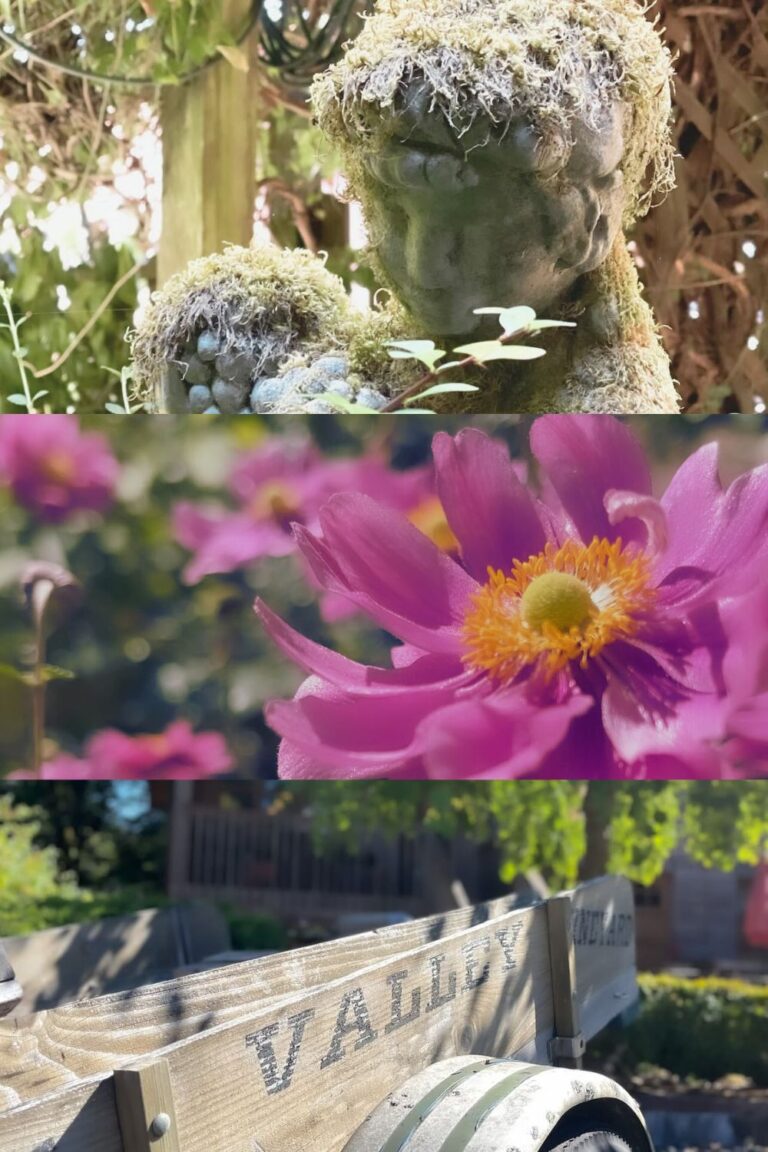

Gardening in the PNW | Storm Aftermath with ‘Tea and a Flower’
Are you searching for tips on gardening in the PNW after a storm? I just faced the challenge of restoring my garden after an intense storm swept through the Pacific Northwest. This experience taught me the right recovery techniques and how a garden is so resilient and so are gardeners. From removing uprooted salad greens, changing plans, supporting damaged peppers, these steps will help your garden bounce right back.
How can a storm recovery improve your gardening journey when gardening in the PNW? Following these recovery methods, my garden has not only survived but has become even more lush. The process of rebuilding has connected me to nature and encouraged renewal and growth. Discover how a storm recovery can enhance your gardening experience and lead to a more resilient and flourishing outdoor space.
Links in this article are affiliate links and if you click on them, we will receive a small commission at no additional cost to you! Clicking and purchasing helps to support this blog and all of the home and garden posts we bring to you! Click here for full disclosure
After such an unusual storm hit the Pacific Northwest, with winds that felt like a tornado and flashes of thunder and lightning, my garden faced unexpected challenges. Join me as I look over the garden to see the damage, revive my plants, and share some tips on gardening in this unique region.
Let’s turn a little set back into a great opportunity to grow and keep gardening!
In this video, I take you on a tour of the garden post-storm. Grab your cup of hot tea, and a blanket and relax in the garden with me. Yes, clearing after a storm can be an opportunity to relax in the garden and feed your soul. It reminds me that even when nature throws us a curveball, there’s a way to adapt and thrive.
A Day In the Garden After the Storm in the PNW: Recovering and Reconnecting
There’s nothing like waking up to the aftermath of a storm that left me wondering if I was just in the Midwest. Accepting that the weather patterns are changing and learning how to adapt has been the biggest gardening lesson this year. We only had 6 weeks, if that, of summer and already the cold and rain, as well as unusual storms arrived.
Tornado-like winds, thunder that rattled the windows, and lighting that turned night into day – it was a wild ride. But guess what! My mother slept through it, while Frank ran outside to save our new patio umbrella that we love. It was so affordable, and rotated 360 degrees, which helped me shade plants and close them quickly when the storms hit. She can sleep through a train going through the house. LOL!

Morning Reflections: A Stormy Wake-Up Call
As I stepped out into the garden, my heart was relieved to see the umbrella was spared, but it sank when I saw the lettuce I was letting bolt and flower to gather seeds. All of them toppled over, not one was spared. Pepper plants were sideways, but I was so fortunate because they did not break.
But gardening is about the ups and downs, it is not about perfection and sunny days. It is about adapting, resilience, recovering, and learning to connect with nature when you are feeling overwhelmed, even after a stormy night.
Assessing the Damage: What’s Salvageable?
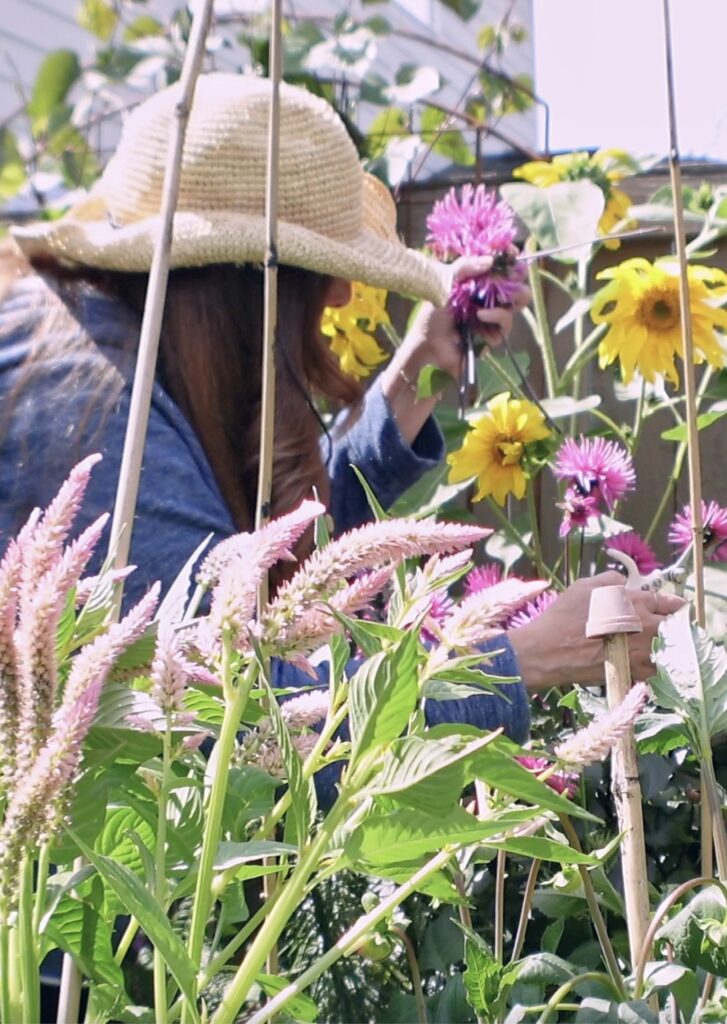
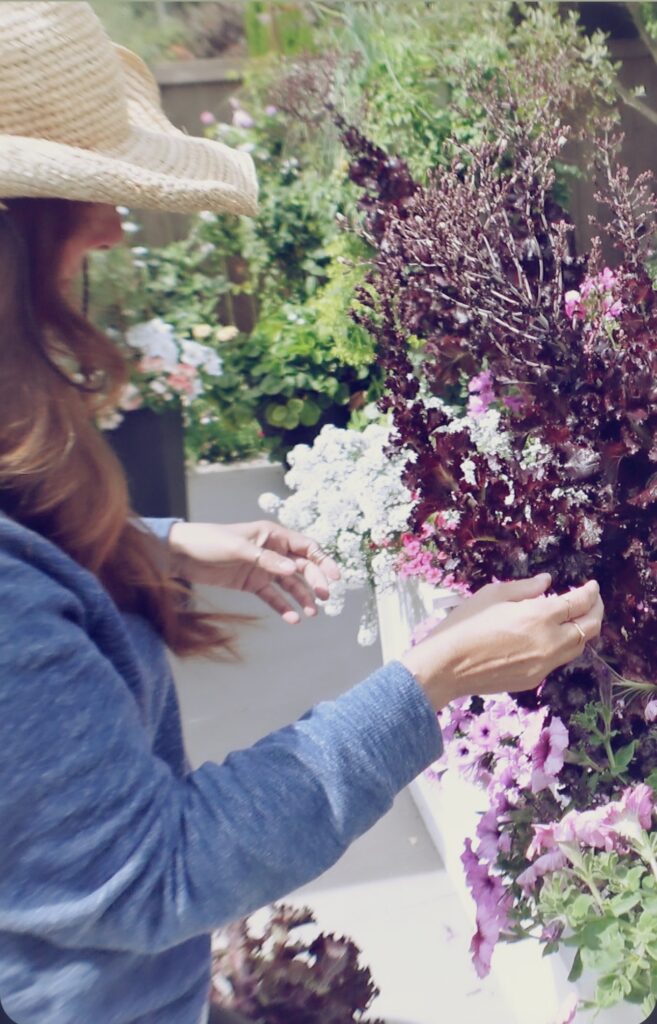
The first thing I did after taking a deep breath to be calm and think clearly about the next steps was to assess what could be saved. For many of the plants, it was a matter of supporting them with a bamboo stick.
I started with cleaning the outdoor seating area and opening the patio umbrella to make sure nothing was damaged, and I could clear my way to what I am going to work on.
- You can plan and learn landscaping ideas that may work in your space to protect or maximize your garden.
- A clear seating area and walking areas.
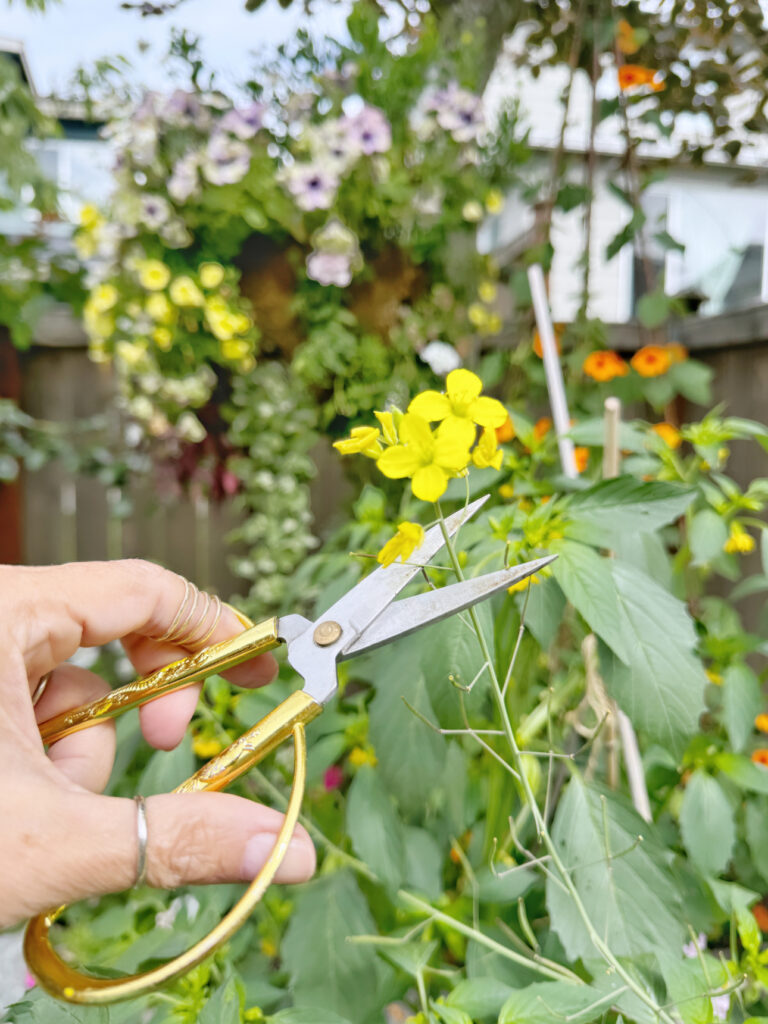
- Gathered a bucket and pruners, as well as bamboo sticks to support plants.
- Accept that I will have to let go of some plants and change plans.
- Check what has fallen over, vs what is broken or not salvageable.
- Support with bamboo sticks all the plants, before I remove damaged ones. Get to them quickly so they do not break.
- Remove any broken plants or prune/trim the broken limbs.
- Have a good cordless blower to make cleaning much easier.
- This is a good time to use clean pruners to deadhead your plants and remove extra leaves that may cause powdery mildew.
- Harvest what is ready to provide a little break to the plant and use the energy to continue making new fruit.
- Remove dead leaves from the ground to prevent diseases from spreading.
- Remove seed heads from plants you want to keep producing flowers or fruit.
- If you have a 360-degree rotating patio umbrella, use it to cover some of your furniture. I love mine, I use it to protect both from heat and when it rains.
Quick tips: How to Start Gardening in the Pacific Northwest
If you are new to gardening in the Pacific Northwest (PNW), welcome to a region where the weather keeps you on your toes!
But, for so many zones, the weather has been a real struggle that we all need adapt to. Here is how to get started:
- Know Your Zone: the PNW primarily falls within USDA Hardiness Zone 7-9. This means mild winters and cool summers – perfect for a variety of crops.
- Start with the Basics: Leafy greens, root vegetables, and herbs are great for beginners. They’re resilient and can handle the region’s ever-changing weather.
- Plan for Pest: Slugs and snails have been the biggest pain of my garden existence this year. Be prepared to protect your plants with natural deterrents like beer traps, crushed eggshells, and copper tape, and if nothing works, use Sluggo.
- Prepare for Rain: The PNW is known for its wet climate. Ensure your garden has good drainage and consider raised beds to avoid waterlogged soil. I added another raised bed this year and have gotten many more harvests. Watch this video to see all the changes I made to optimize my kitchen garden this year.
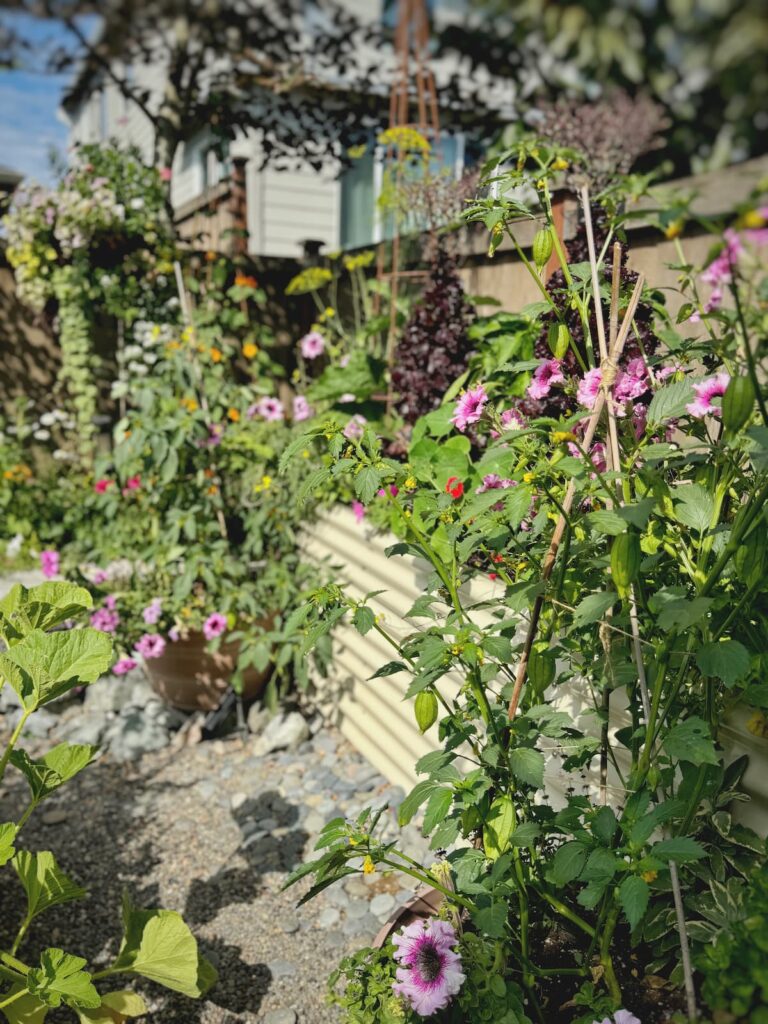
What Vegetables Can You Grow in the Pacific Northwest
The PNW’s climate is ideal for a range of vegetables. Weather you’re a new gardener or an experienced gardener, here is a list of veggies that will flourish in this region.
But I need to be transparent and tell you my struggles with the weather changing so much. I was not able to plant squashes and tomatoes until late in the season, end of June. I don’t have any fruit in my Bocalema squash, but the patty pans squash has given us a lot of fruit. Tomatoes have a ton of fruit, as they are not ready to gather.
I am making changes for next season on how I grow plants to get an earlier harvest. Stay tuned, I will be sharing this on another ‘Tea and a Flower”. I am fine-tuning my strategy and will share it with you in case you want to try it with me. Are you looking on making some changes this next year to improve your harvest?
How has your garden fared in unusual weather? Do you have any tips for recovering from damage? I’d love to hear from you – leave a comment below and share your experience so we can learn from each other.
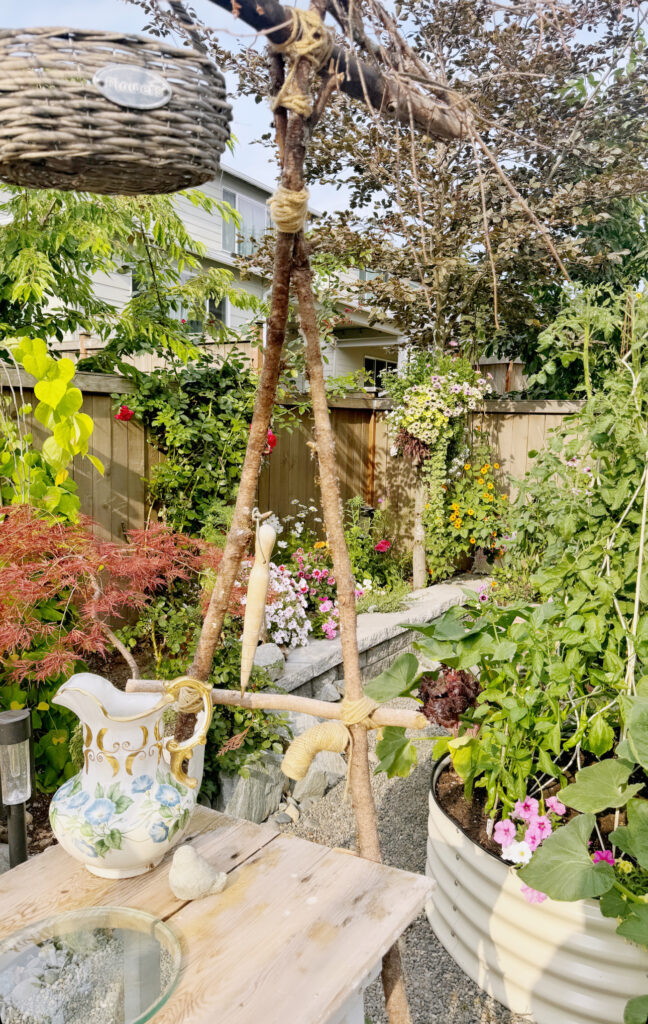
Afternoon Tea in the Garden: Reflecting on Resilience
As I sat down with a a cup of hot tea, the storm seemed a distant memory. Well, not that distant, I do keep a closer eye on the weather now.
The garden, though a bit battered, was already showing signs of recovering.
There is something so healing about being in the garden after a storm. Just like a plant weather’s the storm, so can we. The challenges that have become larger each year, make me appreciate every single thing that is a success and not take one thing for granted.
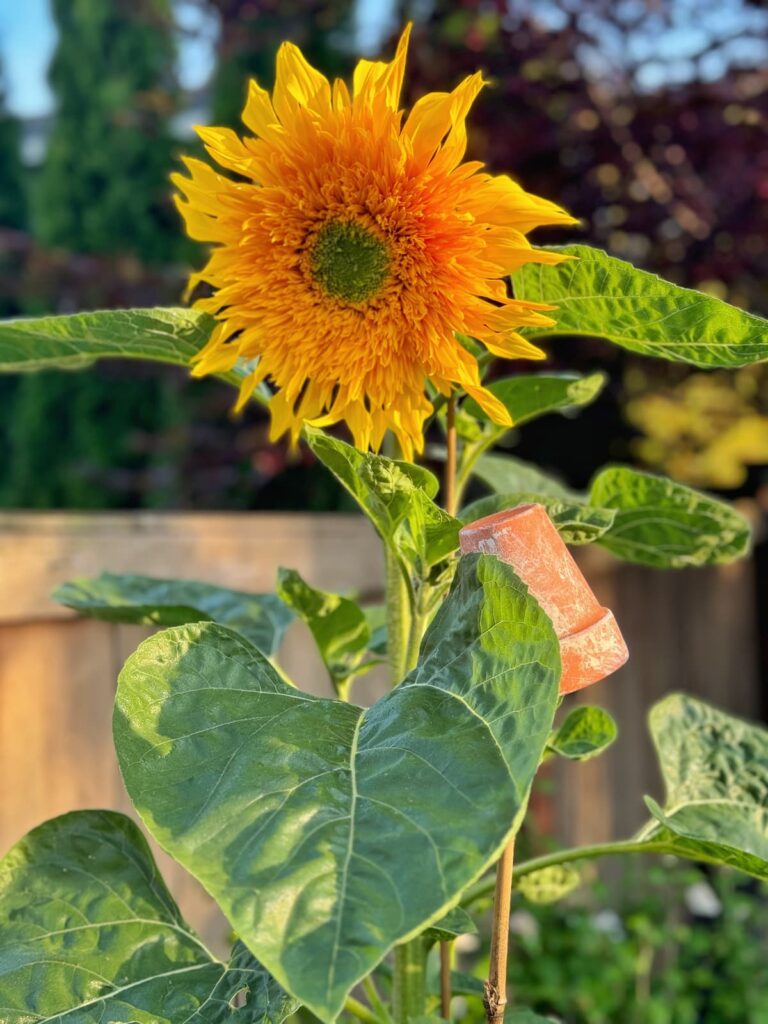
This gorgeous giant teddy bear sunflower bloomed right after the storm. It shines and looks just like I do after a stormy night. I keep finding surprises in the garden!
Gardening for Well-Being in Difficult Times
Gardening is about so much more than plants; it is about nurturing our well-being, supporting others in the gardening community, and healing.
Whether it is the joy of seeing new growth after a storm or the simple pleasure of gardening, creates a unique connection to the world around us.
In the Pacific Northwest where the weather is as unpredictable as it is beautiful, each day in the garden is special.
We went camping at the beach, at the beginning of August and it was so cold and windy. We did not expect this, but we adapted and enjoyed every minute of the vacation and connecting with nature. You have to be flexible and take things as they come.

Let’s continue this journey together – through storms and sunshine, there’s always a new surprise to discoveer in the garden.
Remember to watch the video and share your thoughts in the comments. If you like the silent vlogs, I can add more episodes for you to enjoy.

You Cocoon Awaits You,
Stay Creative!
IF YOU ENJOYED THE POST, PLEASE PIN BELOW TO SUPPORT THE BLOG
FAQ’s
1. What should I do first damages my garden?
Start by assessing the damage to your plants. Remove debris, check for broken branches or stems, and decide what can be salvaged. Replant any uprooted plants, prune damaged areas, and provide support to weakened plants.
2. How can I protect my garden from future storms in the PNW?
Consider windbreaks, such as hedges or fences, and use sturdy supports for taller plants like dahlias. Planting more resilient, deep-rooted plants can also help reduce storm damage.
3. What vegetables recover best after storm damage in the PNW?
Leafy greens, root vegetables like carrots and beets, and hardy herbs tend to recover well after a storm. They are strong and can bounce back quickly with proper care.
4. How does gardening in the Pacific Northwest differ from other regions?
The PNW has a unique climate with mild winters and cool, wet summers. This allows for a longer growing season but also requires careful planning for moisture management and pest control.
5. What are the best vegetables to grow in the PNW?
The PNW has such a unique climate, mild winters, and cool, wet summers. If you get full sun, this will allow for a longer growing season. It does require careful planning for moisture management and pest control.
DON’T LEAVE YET!
Wind Damage to Plants & What To Do
2023 USDA Plant Hardiness Zone Map